The books behind the way I work.
I am less interested in how many books someone has read than in which ideas they kept.
These are the books I return to because something inside them survived contact with real work. They have influenced how I run experiments, design products, solve problems, make decisions and help teams turn uncertain ideas into measurable progress.
Some provided a complete method. Others gave me one principle that changed how I approached the work. All of them earned their place on the shelf.
The working library
Purpose · Value before features
Start With Why
This book helped me understand that the strongest ideas begin with a reason to care, not a list of features.
That principle has followed me through product, experimentation and AI. Before deciding what to build or which tool to use, get clear about the change you are trying to create. A well-defined “why” gives people something to align around and gives the work a standard to be judged against.
Start with the outcome, then decide what belongs in the solution.
Product · Learning through the work
Lean UX
Lean UX turned experimentation from an activity into a way of working.
Its lasting lesson is that you do not need to complete an entire solution before discovering whether the thinking behind it is sound. Make the assumption visible, build the smallest useful test and learn while there is still time to change direction.
That approach now shapes how I build AI systems: less time perfecting the demonstration, more time testing whether it improves the actual work.
Treat every solution as an assumption until the evidence says otherwise.
Experimentation · Build, measure, learn
The Lean Startup
The Lean Startup gave a wider business context to the principles I was already applying to digital products.
Its build-measure-learn loop is simple, but it changes the order of the work. Instead of making a large bet and measuring it afterwards, you create the fastest responsible route to useful evidence.
It remains one of the clearest explanations of why learning is a form of progress.
The first version should answer a question, not complete the vision.
Methods · Turning uncertainty into experiments
Testing Business Ideas
This is the book I reach for when an idea needs to become a practical test.
It translates the broad principle of experimentation into specific methods for testing desirability, feasibility and viability. The visual format also makes it particularly useful when working with teams: you can move quickly from discussion to an experiment everyone understands.
It is not a book I read once and put away. It is a working reference.
Match the experiment to the assumption you need to test.
Behaviour · Understanding repeated use
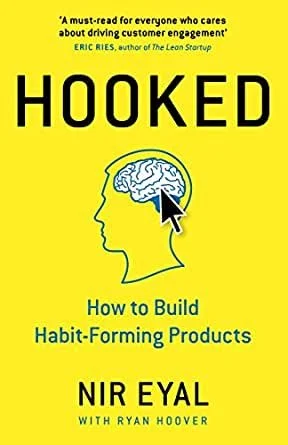
Hooked
Hooked changed how I looked at the relationship between products and human behaviour.
Its framework helps explain why some experiences become part of a routine while others are forgotten after the first use. That matters for AI too. A tool can produce an impressive first result and still fail to earn a place in someone’s working day.
I return to this book when thinking about adoption, repeated value and what makes a new behaviour stick.
Initial interest is not adoption. Value has to repeat.
Focus · Making deliberate choices
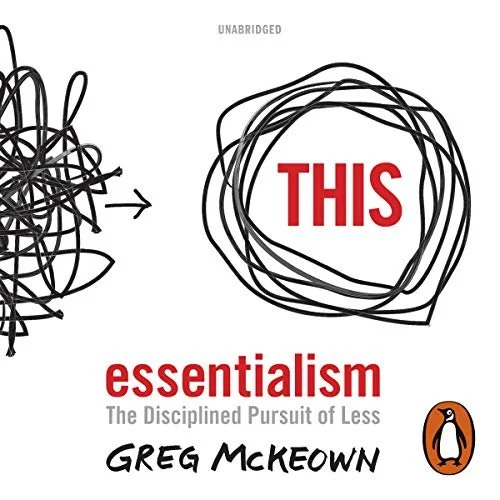
Essentialism
Essentialism is a useful counterweight to the pressure to do more, adopt more and keep more.
Its central idea is not simply to reduce the workload. It is to decide deliberately what deserves your attention. That is especially valuable in AI, where new tools and possibilities appear faster than anyone can sensibly absorb them.
Focus is what allows a useful experiment to become genuinely good work.
If everything is important, nothing has really been prioritised.
Leadership · Creating the conditions for good work
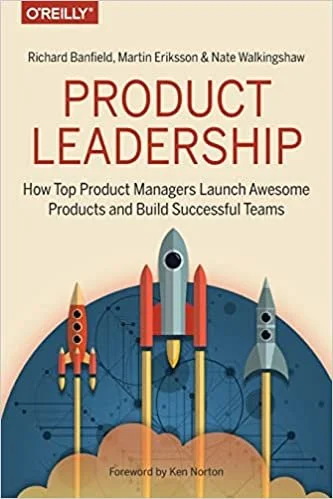
Product Leadership
Product Leadership focuses on the human work behind successful products: navigating uncertainty, aligning stakeholders and helping multidisciplinary teams make better decisions.
It reinforced something I have seen repeatedly. A strong method is not enough on its own. People need a shared definition of the problem, room to challenge assumptions and confidence that evidence can change the direction.
Product leadership is less about having every answer and more about improving how the team reaches one.
Problem-solving · Finding another route
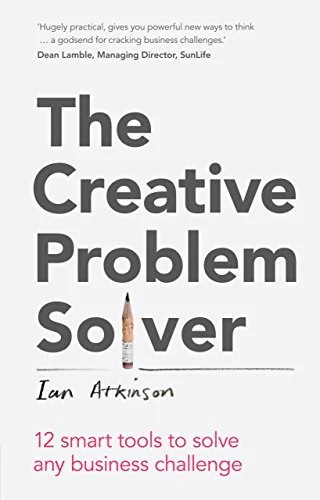
The Creative Problem Solver
This is a practical collection of approaches for looking at a problem from different angles.
Its value is greatest when a team has become attached to the first sensible solution. Changing the way the problem is framed can reveal a different opportunity, a smaller experiment or a better question to answer.
It is a reminder that structured thinking and creativity are not opposites.
When the answers feel repetitive, change the question or the frame.
Facilitation · Turning discussion into decisions
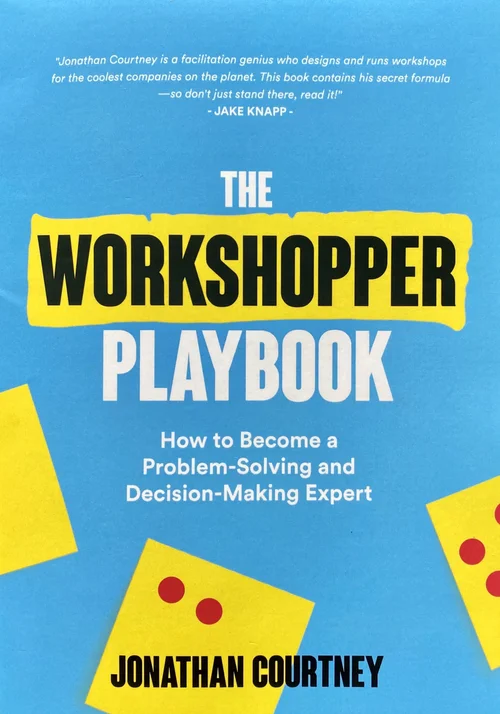
The Workshopper Playbook
The Workshopper Playbook helped sharpen the way I plan and run collaborative sessions.
A good workshop is not successful because everyone enjoyed taking part. It is successful because the right people contributed, the important disagreements became visible and the group reached a decision it could act on.
The techniques in this book are useful whenever knowledge is spread across a room and needs to become a shared way forward.
Design the workshop around the decision it needs to produce.
Ideas become useful when you test them
Books can give you a framework, but reading one does not give you an advantage. The value comes from applying the idea to your own work, measuring what changes and deciding whether it deserves to stay.
That is what I do in The Experiment Log. Every fortnight, I test one AI approach on a real piece of work and share the setup, the evidence and whether I kept it or binned it.
Your AI edge, tested not borrowed.